The drone industry has reached a fever pitch in 2026. What was once a niche hobby for tech enthusiasts has evolved into an essential tool for creators, real estate moguls, and travelers. With the introduction of LiDAR-based obstacle sensing, 8K cinematic sensors, and AI-driven flight paths, choosing the right quadcopter has never been more complex—or more exciting. In this guide, we break down the best drones of 2026, analyzing everything from flight time and sensor size to the latest regulatory requirements. Whether you are a “Drone Ustad” (Master) or a first-time pilot, this is the only resource you need.
1. The Heavyweight Champion: DJI Mavic 4 Pro
If you are looking for the absolute pinnacle of consumer drone technology, the DJI Mavic 4 Pro is the undisputed king. Released in late 2025 and dominating 2026, this drone is designed for professional photographers who refuse to compromise.
Key Specifications:
- Camera: Triple-lens system (4/3 CMOS main, 1/1.3-inch medium tele, and a new 1/1.5-inch Super Tele).
- Video: 6K at 60fps and 4K at 120fps.
- Flight Time: An industry-leading 51 minutes.
- Key Feature: Omnidirectional LiDAR sensing for crash-proof night flying. The Mavic 4 Pro’s standout feature is its AI-tracking 4.0, which allows the drone to follow a subject through dense forests or urban environments without losing sight or hitting an obstacle. For those looking to monetize their aerial photography, this is the best investment you can make in 2026.
2. The Traveler’s Choice: DJI Mini 5 Pro
In 2026, regulations regarding drone weight have become stricter worldwide. This makes the DJI Mini 5 Pro the most important drone in the market. Weighing exactly 249 grams, it bypasses the need for most FAA and EASA registrations, making it the perfect travel companion.
Why it wins in 2026:
Unlike previous Mini versions, the Mini 5 Pro features a full 1-inch CMOS sensor. This was once reserved for much larger drones. You now get professional-grade dynamic range in a package that fits in your jacket pocket. With a rotating gimbal for vertical shooting, it is the best drone for TikTok and Instagram reel creators.
3. The Versatile Workhorse: DJI Air 3S
Positioned between the Mini and the Mavic, the DJI Air 3S is the Goldilocks of drones. It offers a dual-camera setup that provides both wide-angle and zoomed-in perspectives. In 2026, the Air 3S has become the go-to for wedding photographers and real estate agents who need high-quality imagery without the $2,000+ price tag of the Mavic series.
4. Understanding Drone Technology Trends in 2026
When searching for the best drones 2026, you must look beyond the brand name. Here are the technical shifts defining this year:
AI and Path Planning
Modern drones no longer just “stop” when they see a tree. 2026 models utilize path-planning AI. They see the environment in 3D and calculate a flight path around obstacles in real-time, ensuring your cinematic shot is never interrupted.
Satellite Connectivity (Beyond OcuSync)
While DJI’s O4 and O5 transmission systems are excellent, 2026 has seen the rise of satellite-link backup. For long-range drones, this ensures that even if the radio signal is blocked by a mountain or building, the drone remains connected via low-earth-orbit satellites, preventing flyaways.
LiDAR vs. Vision Sensors
While cheaper drones still use standard cameras for obstacle avoidance, the best drones in 2026 have switched to LiDAR (Light Detection and Ranging). LiDAR works in total darkness and is significantly more accurate at detecting thin wires and power lines, which were the “drone killers” of the past.
5. Best Budget Drones for Beginners
Not everyone needs a $1,000 flying robot. If you are just starting your journey, 2026 offers incredible value in the entry-level segment.
- DJI Mini 4K: At under $300, this remains the best entry point for high-quality video.
- Potensic Atom: A strong non-DJI competitor that offers 3-axis gimbal stabilization at a fraction of the cost.
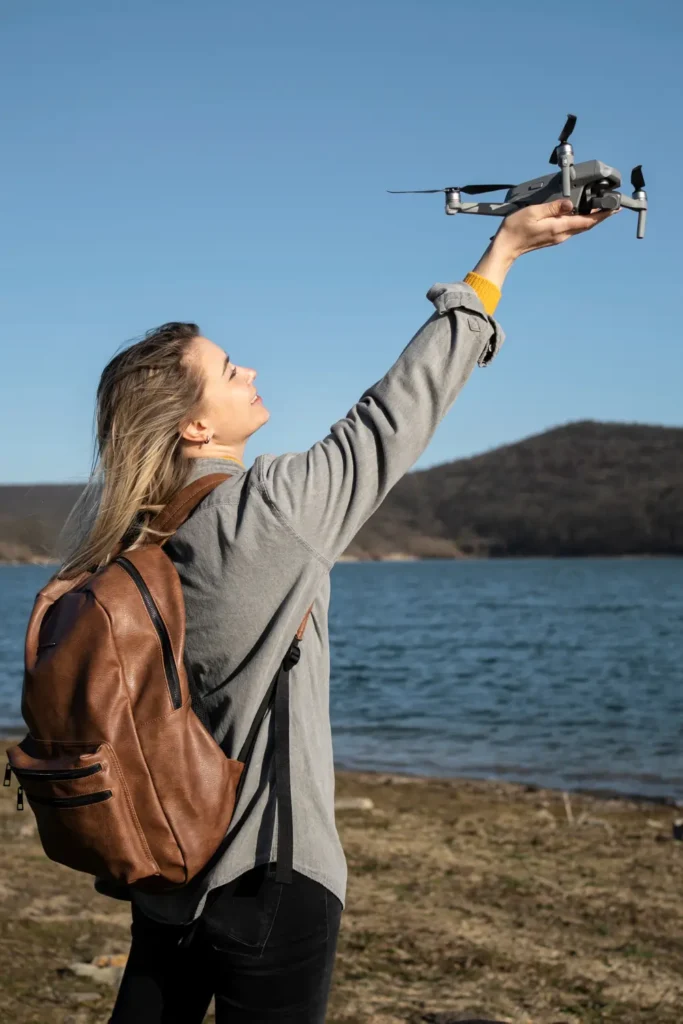
- DJI Flip: A new 2026 release focused on “selfie” automation and AI palm landings, perfect for vloggers.
6. Regulatory Compliance: What You Need to Know
Buying a drone in 2026 requires more than just a credit card; it requires an understanding of Remote ID.
Most countries now require drones to broadcast their location and the pilot’s location in real time. Every drone on this list comes with integrated remote ID. However, if you are building a “DIY FPV Drone,” you will need to install a standalone module to remain legal.
Pro Tip: Always check the “No Fly Zones” via apps like AirHub or B4UFLY before taking off in 2026, as geofencing has become more precise.
7. Battery Life: The 45-Minute Standard
In 2024, 30 minutes was the goal. In 2026, if your drone doesn’t stay in the air for at least 45 minutes, it’s considered outdated. New solid-state battery technology is beginning to trickle down into the prosumer market, enabling longer flight times and faster charging speeds via USB-C PD (Power Delivery).
8. Drone Photography Tips for 2026
To truly be a “Drone Ustad,” you must master the post-processing side of the craft.
- Shoot in D-Log M: This 10-bit color profile allows you to recover shadows and highlights that would otherwise be lost.
- Use ND Filters: Even with 2026 sensor tech, neutral density filters are essential for achieving that “motion blur” in your videos.
- Master ActiveTrack 360: Don’t just fly manually. Use the drone’s AI to perform complex “orbit” and “spiral” shots that are impossible to do by hand.
Conclusion: Which Drone Should You Buy?
The “best” drone depends entirely on your goals:
- For Professionals: The DJI Mavic 4 Pro is the only choice.
- For Travelers: The DJI Mini 5 Pro is the king of the sub-250g category.
- For Value Seekers: The DJI Air 3S offers the best performance-to-price ratio.
- For Beginners: The DJI Neo or Mini 4K is perfect for learning the ropes.
The sky is no longer the limit; it’s your playground. As drone technology continues to integrate with AI and satellite communication, the barrier to entry for beautiful aerial cinematography has never been lower. Ready to take flight? Visit DroneUstad.com for more in-depth reviews, firmware updates, and the latest news on the drone industry.